

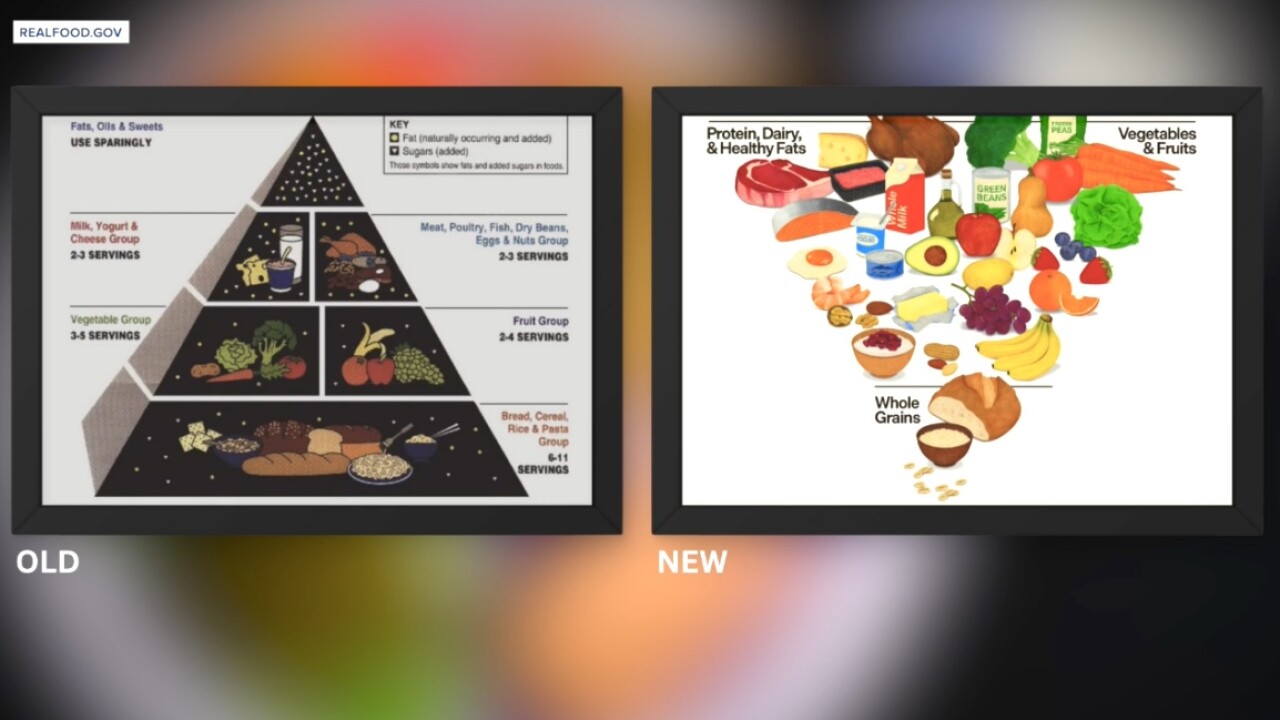


WACO, Texas (KXXV) — For the first time in nearly 30 years, the federal government is reshaping how Americans are told to eat, turning the iconic food pyramid on its head and changing what foods are considered the foundation of a healthy diet.
Watch the full story here:
The U.S. Department of Health and Human Services recently released updated dietary guidelines that place greater emphasis on protein, fruits, vegetables and healthy fats, while moving whole grains and carbohydrates lower on the list.
Officials said the changes are meant to encourage healthier eating habits, cut back on processed foods, improve heart health and reduce the risk of chronic disease.
At a local grocery store in Waco, shoppers shared mixed reactions to the new recommendations.
“That pyramid's been around since my children were born, so I don't understand why they're messing with it now. It was supposed to be good for us back then. It should still be good for us,” said Rose Mallard, a local shopper.
Others said the new approach reflects how people used to eat before heavily processed foods became common.
“It is healthier. Absolutely. I think we've always known that that's how we live, right? It used to be, if you were a poor person, you were growing your own stuff and you had the chicken in the backyard, you were actually eating healthy,” said Sarah Lopez, another shopper.
While health officials said the changes could benefit long-term wellness, some families said rising grocery prices make it difficult to follow the new guidance.
“Meats and stuff are too expensive anyway right now. We do a lot of vegetable stuff, but also a lot of starch, with the potatoes and the oats and all that. I know we need protein, but shoot, I can't afford a steak right now,” Mallard said.
Lopez said cost is often the deciding factor when families are choosing what to put in their carts.
“I feel that Americans, you keep it in mind, because we know we want to eat well, but at the end of the day you're gonna make a decision of, ‘Well, this is what's within reach.’ People are just going to have to go with what's the economic choice,” she said.


