

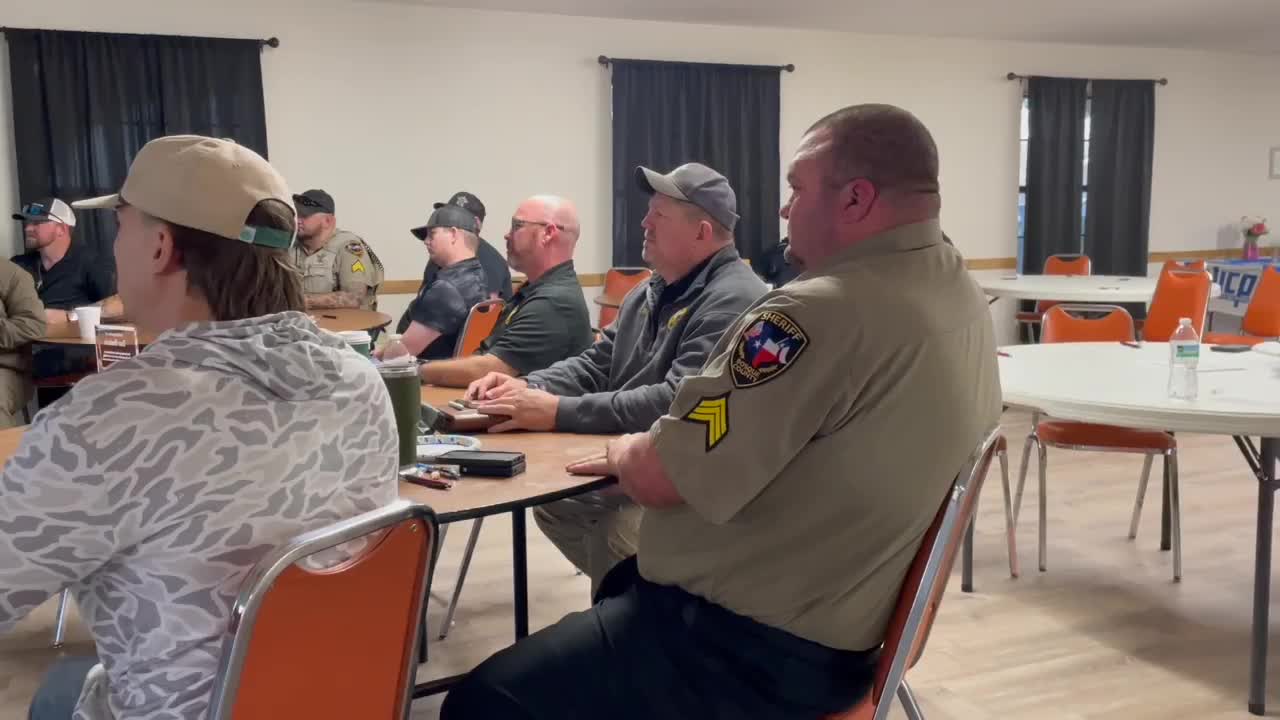


VALLEY MILLS, Texas (KXXV) — Class was in session for Bosque County law enforcement. They received a refresher course on responding to domestic abuse calls.
- Law enforcement heard from domestic abuse survivors
BROADCAST TRANSCRIPT:
“My abuser told me for years, I’ll kill you if you call the cops," said Karath Pruet, a domestic abuse survivor.
Karath Pruet and Sandy Raushenberger are both survivors of domestic abuse who have lived to see another day.
Now, they’ve come together along with the NICP to host the first domestic abuse survivor training for Bosque County law enforcement.
For Raushenberger, she’s also heard those same words
“I’ll kill your family, you’re worthless, you’re nothing, you’ll never amount to anything without me," said Sandy Raushenberger, a domestic abuse survivor.
Pruet and Rausenberger said domestic abuse starts mentally.
When police are called to a domestic abuse situation, victims become scared, and sometimes they can back down from seeking help. They said this training can help save a person's life.
“Learning different signs to watch for, even if the victim says no, he hasn’t hit me. They’re watching their eyes, their mannerisms. They’re looking for any signs of bruising or scratching," said Rausenberger.
Valley Mills Police Chief Michael Hamilton said a training on domestic abuse is critical to their line of work.
“I think it’s great for all the agencies to come together and get what is called a refresher when it comes to looking at how the laws and some of the crimes that we deal with on a daily basis. The mind can never stop training or learning," said Valley Mills Police Chief Michael Hamilton.
According to the National Domestic Violence Hotline, just under 15% of women (14.8%) and 4% of men in the U.S. have been injured as a result of intimate partner violence that included rape, physical violence, and/or stalking by an intimate partner.
When it comes to responding to domestic violence…Chief Hamilton said properly documenting domestic violence calls is important. He said sometimes it can take days for brushing on a victim to appear.
“Just because we get there and we don’t see the visible marks doesn’t necessarily mean that the crime didn’t actually happen. Doesn’t necessarily mean that the victim didn’t strike in the area that she’s indicating; that’s where the photograph would be most important," said Chief Hamilton.
Raushenberger said that because there were officers who once believed her, she was able to survive, and she wants this for all victims.
“But they also showed faith in me, and in that faith in me I’ve certainly turned my life around," said Raushenberger.
Raushenberger who funded the event herself said the following:
"It was the first ever training. I plan to continue with more trainings with officers being able to ask questions of survivors. The best way to help a victim is to understand the victim's mindset in a domestic violence response. The way officers can best learn that is through a “survivors” perspective."


