



HEWITT, Texas (KXXV) — Midway High School student-athletes balance mental and physical health pressures during the school year
For student-athletes at Midway High School in Hewitt, the pressure is not just during the game, but also in the classroom. With April being Stress Awareness Month, the daily routines of high school and college student-athletes shed light on the pressure of balancing school and practice, and how competition can take a toll on both physical and mental health.
Watch Full Story Here:
For Midway High School cheer captain Lilia Nesbitt, energy is the name of the game.
"OK, so the first thing we do is, um, we usually have morning practice for our pep rallies, and then, um, we practice or we get out of class at sixth period, practice for the pep rally, then, then we have a pep rally right after. Then after that, we go home, get ready, then we have game days, or we have game," Nesbitt said.
On top of a full cheer schedule, there is still schoolwork waiting.
"I am currently I’m in real estate. I’m in, um, algebra, uh, physics, and um, usually, like, what gets me, um, caught up in all the work is not doing my work on time, but you just completing your work in class, that’s… that’s, yeah, that’s the key, not having homework," Nesbitt said.
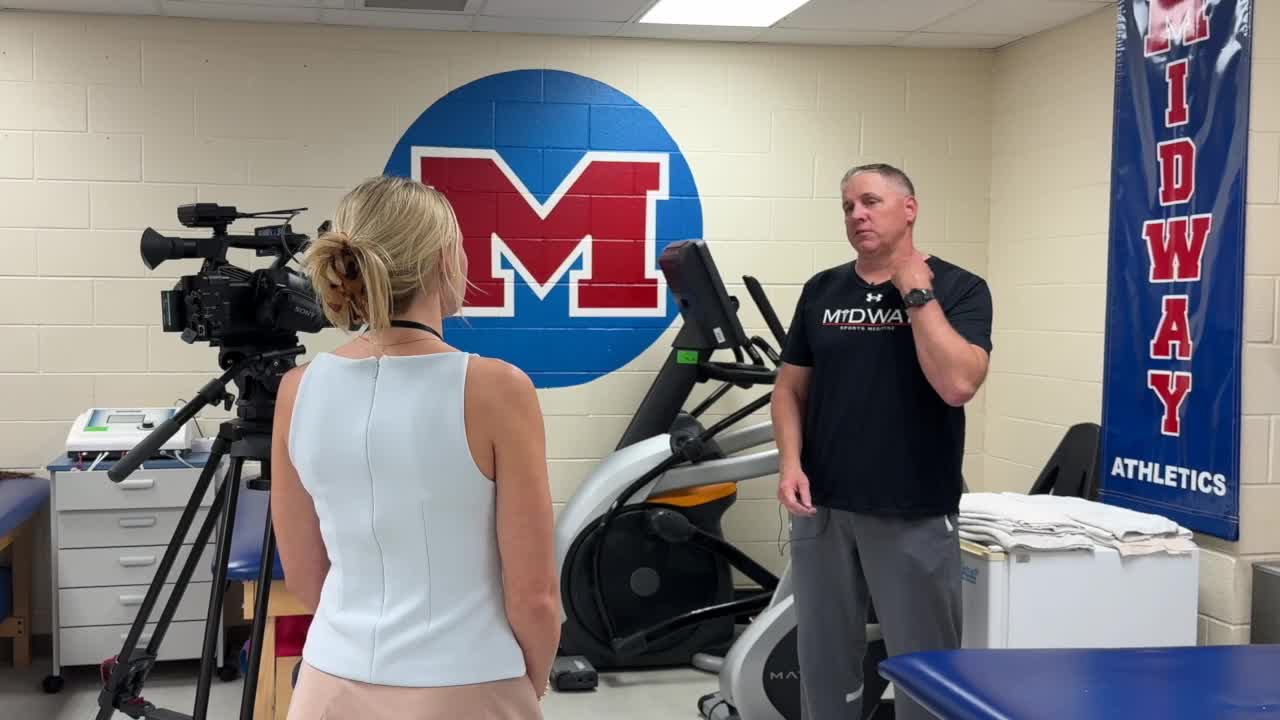
That kind of nonstop schedule is something Midway Head Athletic Trainer Chad McCune tells me he sees often, not just with cheerleaders, but with student-athletes across the board.
"We have a lot of students even outside of school do a lot of club sports, so whether it’s soccer, volleyball, baseball, softball, you know, basketball we have a lot of them, so a lot of them are not only doing practice or workouts during the day, but they’re going in the evenings and practicing. So you’ll, we’ll have, you know, they’ll be coming home late at night and then getting up early to come to work out. So we see a lot of those kids and a lot of overuse injuries from with that," McCune said.
One of the most important parts of balance is recognizing the early signs to take a break.
"It starts out with soreness and then from that soreness it, it actually does involve into an actual injury. So, you know, a good example is they’ll start developing shin splints or something like that just from running, especially on a hardwood floor for hours and stuff," McCune said.
Catching those early warning signs is critical to giving the body time to recover.
"Rest is very important. Even professionals have a day of rest. So you’ve got to be taking care of your body. So afterwards be icing, stretching, things like that before they go to bed. And then if they’ve got time in the morning to do the same things, you know, work, stretch it out, work through those things, they can come in and get treatment from us," McCune said.
For parents and student-athletes, experts advise that lots of sleep and open communication with coaches, teachers, and trainers can help spot those warning signs early before they turn into a bigger issue.
This story was reported on-air by a journalist and has been converted to this platform with the assistance of AI. Our editorial team verifies all reporting on all platforms for fairness and accuracy.
