

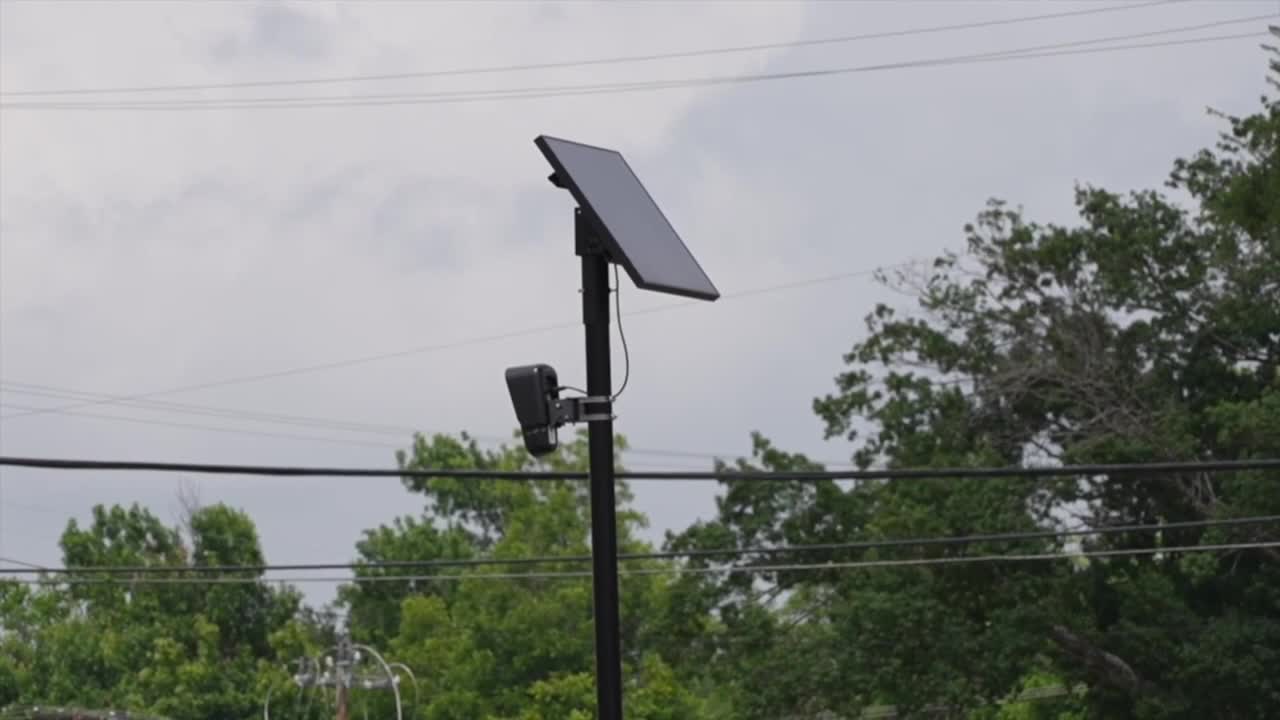


TEMPLE, Texas (KXXV) — A Temple police officer has resigned after an internal audit found they misused the department's Flock camera system, raising concerns among residents who have questioned the surveillance technology for months.
Temple police have used Flock cameras, which track license plates, for years. Under new Chief Coy Brown, the department now conducts internal audits of the system twice a month. The department released a statement Friday addressing the incident.
"Chief Brown has communicated his clear expectations to all officers that ALPR systems are to be used only for authorized law enforcement purposes in strict adherence to Department policy. Any personal, unauthorized, or otherwise improper use will not be tolerated and will result in appropriate discipline, including potential criminal charges, if applicable."
Temple police say the investigation will continue in compliance with department policy and state law. The department has also asked the Texas Rangers to conduct an independent investigation.
Some residents say the resignation and increased audits do not go far enough. Pauline Wiebelhaus said the officer should face the same consequences any member of the public would.
"Any of us would be facing jail time and fines for that. Public trust — it's stalking, a violation of public trust. We give an officer our trust to do right by the community. And when there's already animosity with the police, and then you have police doing this kind of thing, it just makes it worse."
Resident Lynn Thomas said she wants transparency moving forward but questioned whether twice-monthly audits are a sufficient response.
"He got caught, we don't know what was going on. Maybe others were doing it that didn't get caught. We just know who got caught. And the police chief said that they're doing twice a month audits. But if you have to do it twice a month, I don't know that that's the flex you think it is."
Other residents have been calling for a pause on the program altogether. Carly Byrd said the city has not done enough to address community concerns about where data goes and who can access it.
"They're not listening to the residents. If we could just put a pause on this surveillance and try to understand where our information is going, who has access to it, what are they requesting it for, what constitutes an investigation — we don't know enough to continue."
This story was reported on-air by a journalist and has been converted to this platform with the assistance of AI. Our editorial team verifies all reporting on all platforms for fairness and accuracy.
