



KILLEEN, Texas (KXXV) — Killeen city leaders are working to find the right regulatory approach for potential data center developments, even as a statewide moratorium has temporarily halted all new data centers from opening.
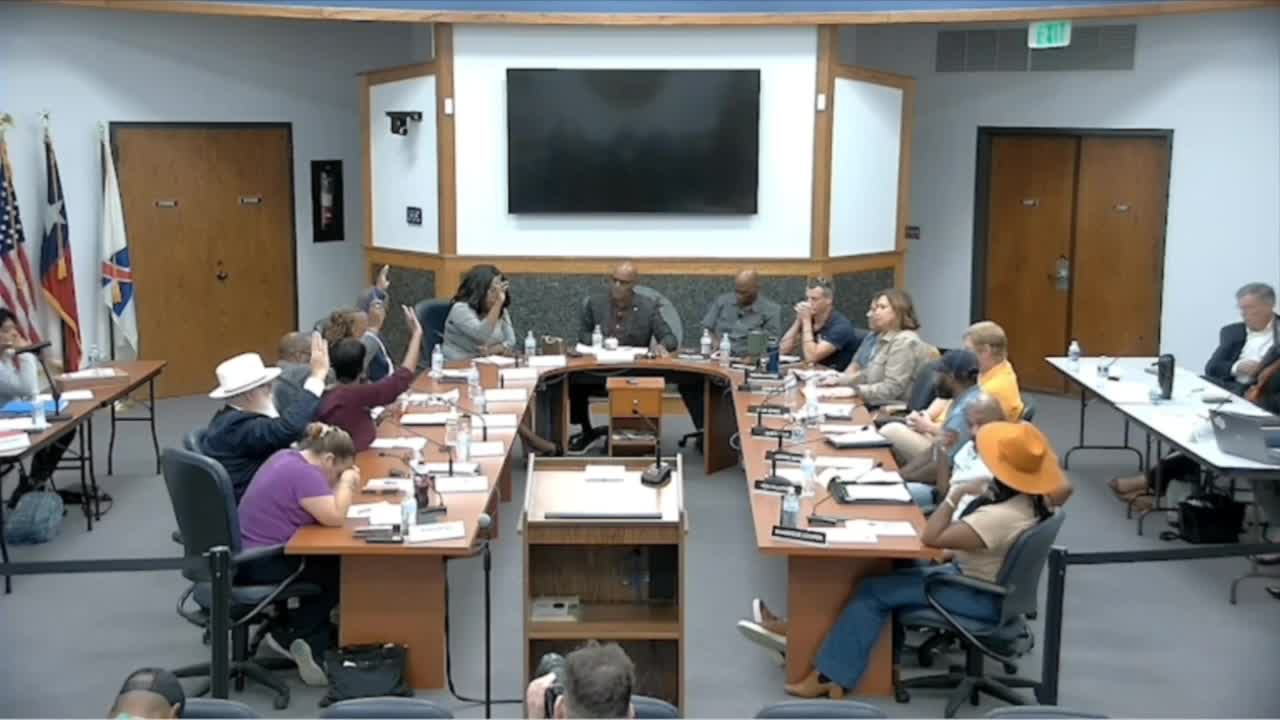
At the most recent council workshop, leaders voted to reverse their earlier decision to pursue a Conditional Use Permit (CUP) process for data centers, opting instead to update current zoning conditions. The topic remains a priority as data centers continue to develop across the county and state, and Killeen saw a proposal for one earlier in the year.
Councilmember At-Large Mellisa Brown said the city is still developing its regulatory plan.
"We are still in the process of coming up with an ordinance to design the zoning requirements and the regulations that the city of Killeen will have put in place," Brown said.
Under the current framework, data centers are categorized as small, medium, or large. Small data centers are permitted "by right."
"'By right' just means that as long as they meet the rest of the requirements, there is no city council interaction and we cannot prohibit them from going into that zoning area," Brown said.
Council previously voted to explore a new CUP ordinance, which would have allowed the council to set data center-specific guidelines rather than relying on existing zoning. At the most recent workshop, leaders reversed course and chose to focus on adjusting current zoning conditions instead.
Wallis Meshier, the city's Executive Director of Development Services, said the approach has implications for how developers interact with the city from the outset.
"Conditional Use Permits (CUPs) are negotiated individually with each prospective developer on a case-by-case basis. Establishing appropriate conditions or parameters for data centers, and including those conditions in the Code of Ordinances, would provide more certainty to the developer regarding the City's expectations for data centers. Including the supplemental regulations in the Code of Ordinances, as opposed to requiring all data centers to obtain a CIP, allows the developer to have a clear understanding from the beginning of their due diligence process about what is, and is not, allowed in Killeen," Meshier said.
Meshier said both regulatory paths lead to similar protections for the community.
"The end result of incorporating conditions into the Code of Ordinances is effectively the same as requiring a CUP for every data center – in both cases, appropriate parameters and guardrails would be put into place to safeguard the city's infrastructure and resources, and to protect surrounding properties from potential nuisances. The primary difference is that including conditions in the Code of Ordinances, rather than negotiating conditions with each developer through a CUP, would allow a prospective data center to obtain zoning approval faster and more efficiently," Meshier said.
For Brown, the CUP approach would give the city a greater level of oversight over individual projects.
"That allows us to pick and choose what requirements we have now. If that data center does not want to meet those requirements at that point, it would be their choice. We're not prohibiting it from happening, but that gives us a large amount of oversight to say, are you following the restrictions?" Brown said.
For now, no new data centers can open anywhere in Texas. Meshier said the state stepped in to evaluate the potential strain on infrastructure.
"The State of Texas has currently imposed a moratorium on data centers to allow time to evaluate their impact on water and electrical infrastructure. Until the State concludes their audit, no new data centers will be permitted in Killeen," Meshier said.
As for the timing of establishing regulations, Meshier said there are arguments on both sides — whether to set rules now or develop them as individual projects progress through the approval process.
"There are pros and cons to each; but ultimately, the conditions for data centers – whether they are established via an amendment to the Code of Ordinances, or negotiated through the CUP possess – will establish appropriate guardrails for data center developments, and will follow the same public input process. Both paths will require public hearings at both the Planning & Zoning Commission and City Council," Meshier said.
Despite the statewide pause, Brown said Killeen is already feeling the effects of data center growth in the broader region, particularly from neighboring Temple.
"Temple already has several data centers either operating or in the preparation stages to start operations. They are on the same grid as Killeen, so we are already being affected by that, both in our electricity and the amount of water usage that's going to come in through Killeen through WCID1 and out of our lakes," Brown said.
Council plans to discuss the issue in more depth at a future council meeting.
This story was reported on-air by a journalist and has been converted to this platform with the assistance of AI. Our editorial team verifies all reporting on all platforms for fairness and accuracy.
