

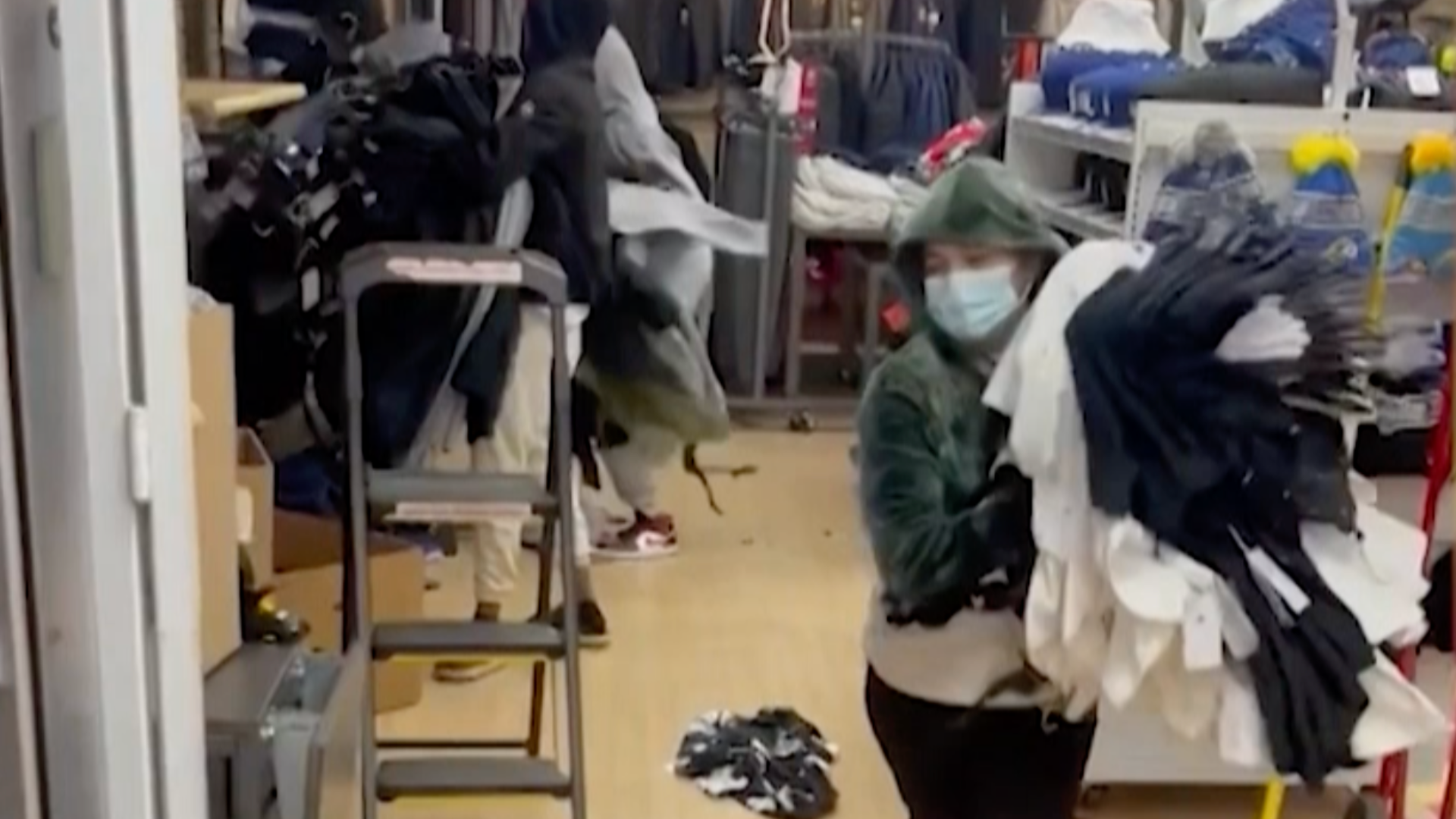


When most people think of retail theft, they picture someone slipping an item off a rack, sneaking lipstick into a backpack, or a stranger stealing a package from a front porch. But experts say the problem has grown into something far more complex.
"Retailers and even supply chain organizations are talking about large increases in cargo and supply chain theft," said David Johnston, vice president of asset protection and retail operations for the National Retail Federation.
Johnston said many offenders use military-like tactics or cybercriminal schemes to pose as legitimate brokers and steal cargo — without ever setting foot inside a store. This criminal activity is known as Organized Retail Crime, or ORC. According to the NRF, ORC operations have moved beyond physical store theft to more sophisticated forms.
"We're seeing them move a little further up the supply chain, as well as going after some of the financial instruments like gift cards," Johnston said.
A massive hit to retailers
Shoplifting isn't new — retailers already plan for "shrinkage," or inventory loss. But retailers are contending with rising levels of theft and fraud.
RELATED STORY | Retailers report sharp rise in theft and violence
In the NRF’s 2025 report on the impact of theft and violence, retailers reported an 18% increase in the average number of shoplifting incidents per year in 2024 versus 2023.
"It impacts the bottom line, and that bottom line is money taken away for additional jobs, to bring more product into the store, to keep prices low," Johnston said. "What we’re seeing is a larger increase in dollar loss, which will eventually impact us as consumers."
Package theft a mainstream cost of online shopping
Porch piracy, not included in the NRF’s data, is another aspect of rampant retail theft. It’s also a category consumers experience firsthand.
In new data from the marketing platform Omnisend, nearly one in three households, 30%, experienced package theft last year. Of those victims, 62% received a refund or free replacement, costing retailers nearly $8 billion.
"That’s just money out of their pockets," said Greg Zakowicz, an e-commerce and retail advisor to Omnisend. "They’re having to do chargebacks. They’re issuing new products to people. That all comes with a cost."
To combat porch theft, he said companies have already introduced in-store or curbside pickup options, pickup lockers, and delivery photos. When costs become too much to handle, retailers’ policies could change. For example, a 50-cent to $1 order protection fee.
RELATED STORY | Why is there an increase in shoplifting nationwide?
"And if people don't opt into it, they don't get the refunds — they don't give replacement products," Zakowicz said.
Efforts to stop organized retail crime
The effects of repeat theft are visible to anyone who walks into a store.
"We see it by walking into the retail store and seeing merchandise either missing or merchandise that is locked up," Johnston said.
The National Retail Federation is urging Congress to address the issue by passing the Combating Organized Retail Crime Act, or CORCA. If passed, the bill would provide federal resources to local authorities to stop theft groups that steal from one community and move merchandise across state lines or international borders.
"That's something that state and local law enforcement -- they don't have the resources, nor do they have the authority in a lot of instances to go after these larger groups," Johnston said.
CORCA advanced through the committee stage in January but is awaiting a full House vote.
